
Home » Materials » Fiber Reinforced Composites

LWRT (Lightweight Reinforced Thermoplastics) is a composite material made of glass fiber and polypropylene fiber through combing, web laying, needle punching and hot pressing. Its surface is often covered with fabric or film. It is an advanced variation of glass mat reinforced Thermoplastics (GMT) designed to provide enhanced performance for specific applications where weight reduction is a top priority. While both materials belong to the family of thermoplastic composites, LWRT is unique in that it incorporates lighter, often shorter, reinforcement fibers or other lightweight materials. Despite its lower density, LWRT maintains a balance of properties, with good impact resistance, sound absorption, and thermal stability.
LWRT Offers Better Performance
Health & Environmental Protection
- The main components of LWRT sheets are glass fiber and polypropylene, without any residual or volatilized harmful substances such as benzene, aldehydes, and phenols. Experiments have shown that LWRT interior panels have no odor at a high temperature of 90°C.
- LWRT materials are recyclable, which is conducive to the sustainable development of the economy.
Safe and reliable
- LWRT sheets provide good flame retardant properties and extremely low burning speed (≤30mm/min), reducing the possibility of fire. Fiberglass felt can effectively absorb impact force and protect the human body.
- Fiberglass felt can effectively disperse and absorb external impact force through its excellent impact resistance, reduce damage to objects or human body, and provide better safety protection for users.
Specifications
| Materials | PP(polypropylene) + glass fiber |
| Weight | 850gsm-2500gsm |
| Width | 300-3000mm |
| Thickness | 2.0-5.0mm |
| Color | Black White, brown, grey, etc. |
Performance Comparison
| g/m2 | Sheet Thickness | Heating expansion thickness | Formable thickness (excluding covering layer) | Bending strength (sample: 50mm wide and 4.5mm thick) | |
| MD | TD | ||||
| 850 | 2mm | 6mm | 2~5mm | 10N | 8N |
| 950 | 2mm | 8mm | 2~5mm | 12N | 10N |
| 1050 | 2.2mm | 10mm | 2.5~6mm | 15N | 12N |
| 1100 | 2.6mm | 10mm | 2.5~6mm | 20N | 15N |
| 1200 | 2.8mm | 10mm | 2.5~6mm | 25N | 16N |
| 1500 | 3mm | 12mm | 2.5~7mm | 40N | 25N |
| 1800 | 3.5mm | 12mm | 2.5~8mm | 55N | 3ON |
| 2100 | 4mm | 15mm | 3~8mm | 75N | 50N |
| 2500 | 5mm | 15mm | 4-8mm | 100N | 65N |
How TOPOLOGROUP Optimizes LWRT Performance


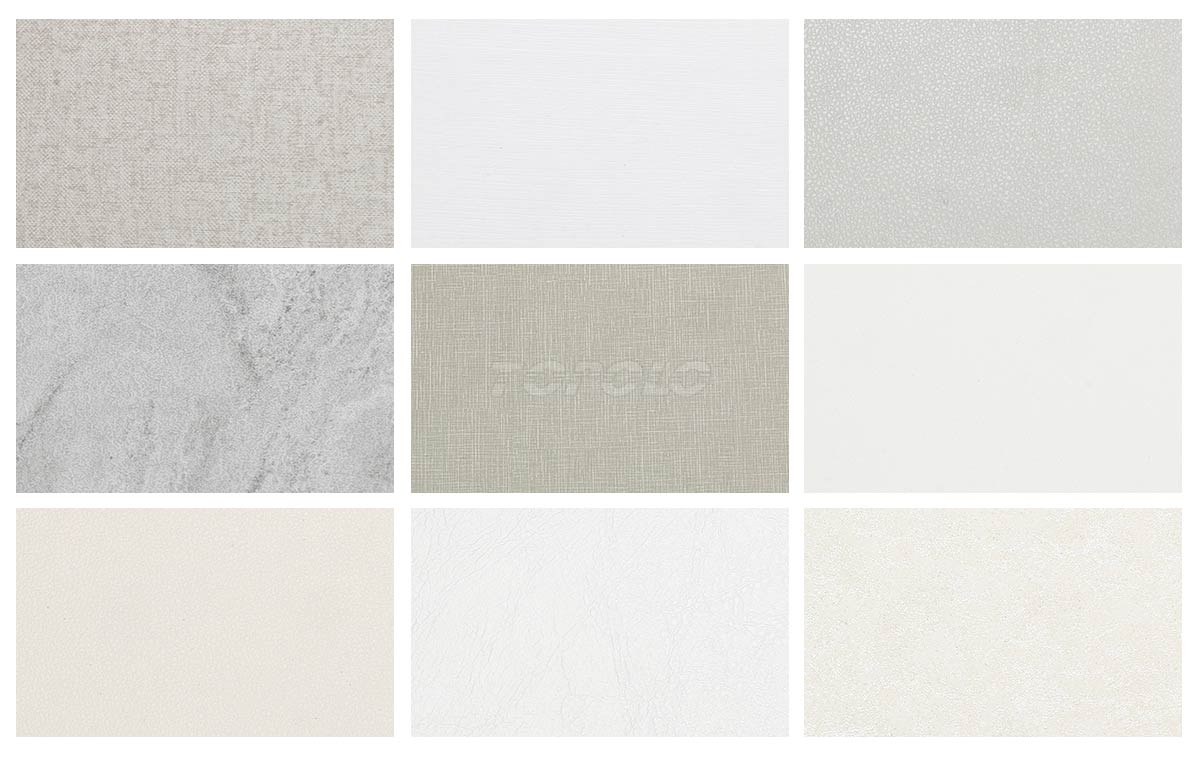
- The surface of LWRT can be coated with a decorative layer of various patterns to exert its artistic effect.
- Without sacrificing performance, the overall weight of the new TOPOLOGROUP LWRT material is 20-30% lower than that of the ordinary material.
- As a further improvement, other auxiliary layer materials are added to enhance the performance of LWRT.
Schematic Diagram


LWRT Surface Patterns
(Customizable: Please contact us for more pattern information)
Application of LWRT in the Automotive Industry
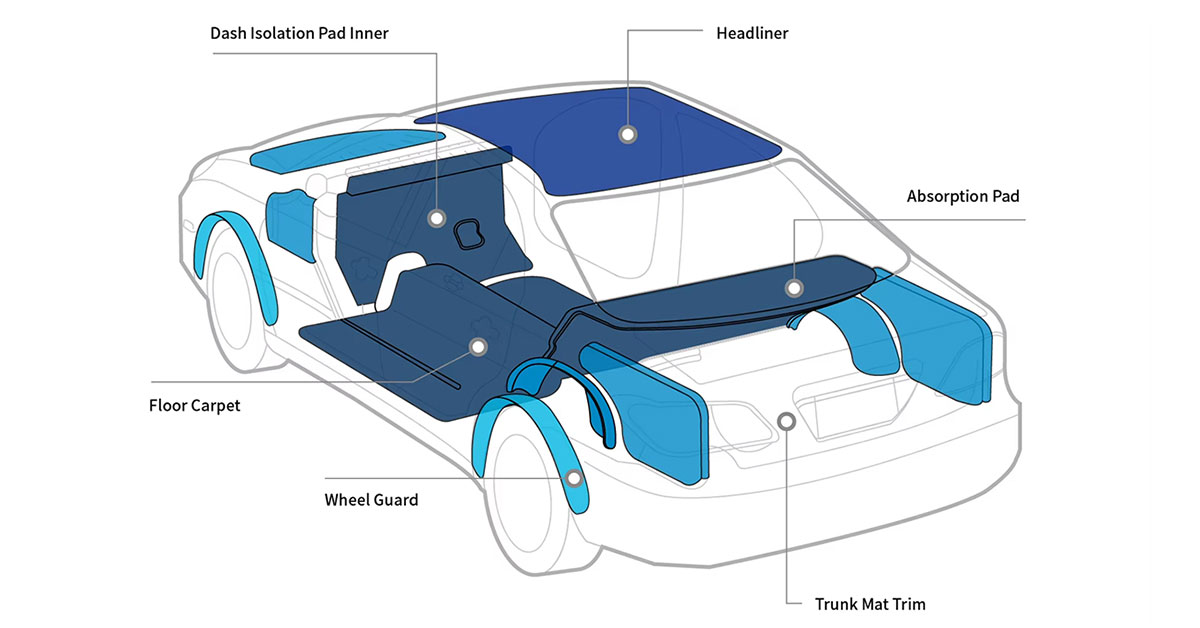
Lightweight Reinforced Thermoplastic is increasingly being used in the automotive industry due to its outstanding properties such as lightweight, durability, and cost-effectiveness. Its versatility and performance make it an ideal material for various automotive applications, especially in the pursuit of reducing vehicle weight and improving fuel efficiency without compromising safety or performance.
- Headliner Systems.
- Door Trim Panels.
- Parcel Shelfs.
- Pillar Trim (A/B/C Pillars).
- Floor Carpet Substrate.
- Trunk Liners.
- Wheel Arch Liners.
- Engine Under Covers.
Application of LWRT in the Interior Decoration
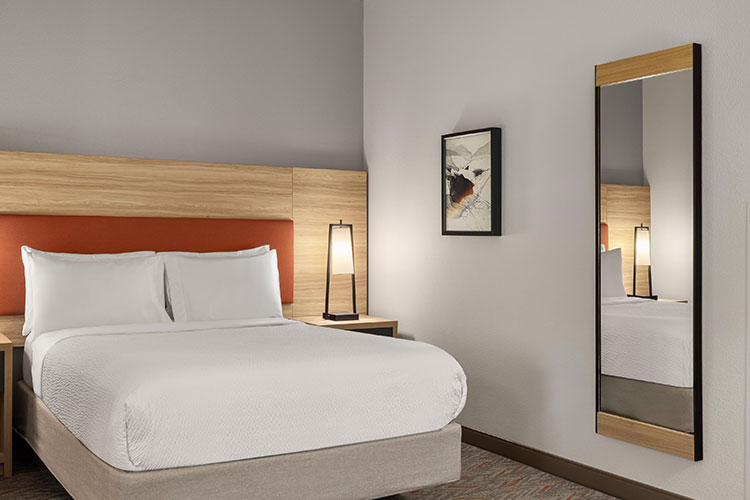
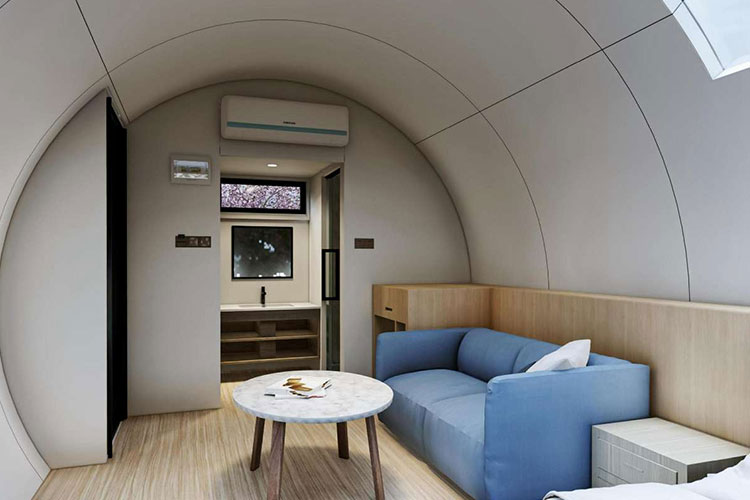
As an advanced lightweight composite material, Lightweight Reinforced Thermoplastic (LWRT) is increasingly being adopted in interior applications. It offers an excellent combination of aesthetic flexibility, cost efficiency, and manufacturing productivity, making it a promising solution for modern interior design and modular construction
- Wall panels and decorative cladding systems.
- Ceiling panels and headliner-style structures.
- Partition walls for modular spaces.
- Cabinet backing panels and furniture substrates.
- Bathroom wall panels and wet-area enclosures.
- Integrated storage units and lightweight furniture components.
- Acoustic panels for noise reduction in indoor environments.